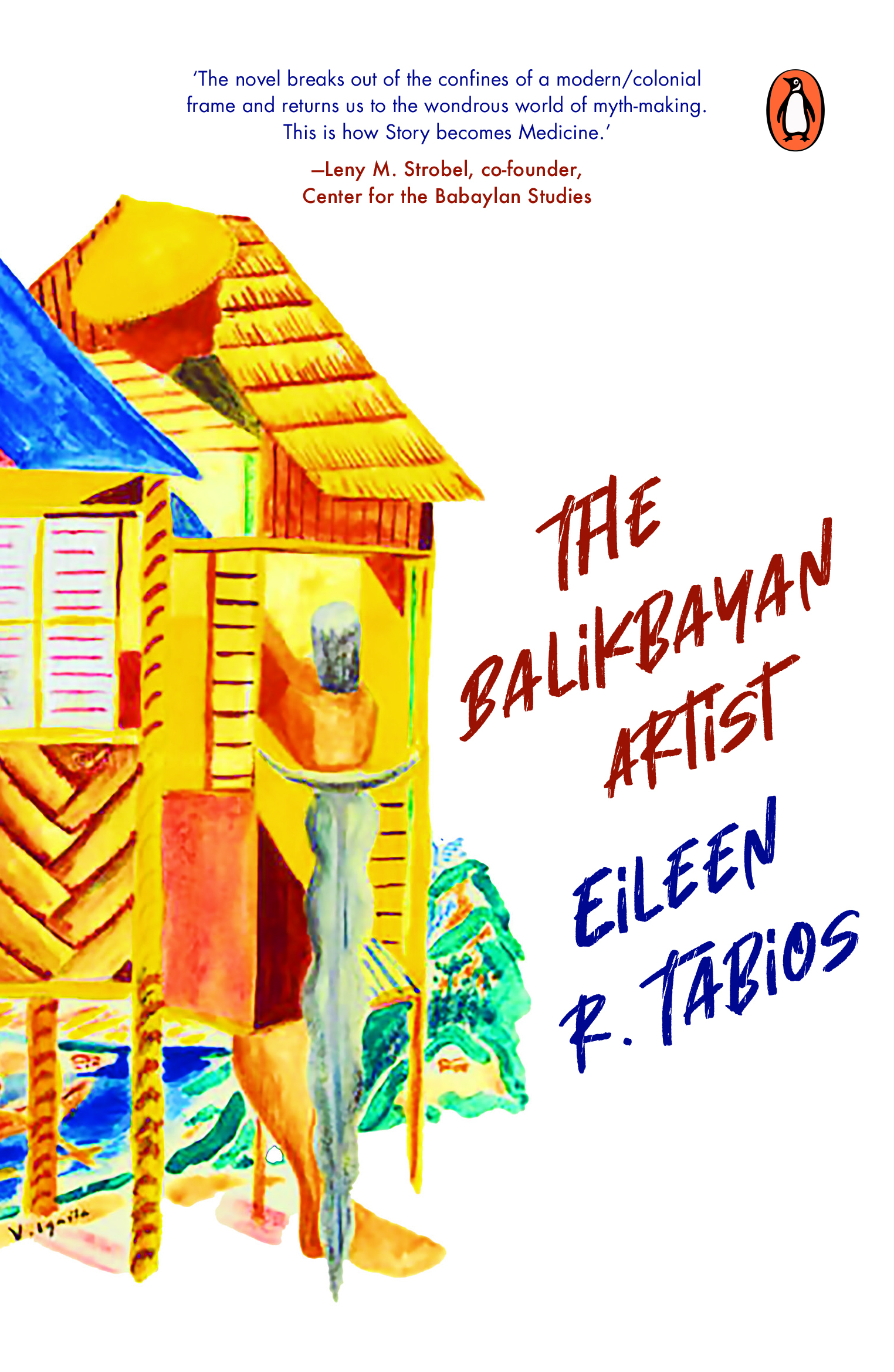
The Balikbayan Artist by Eileen R. Tabios
Penguin Random House SEA
ISBN: 9789815233049
Release Date: 2024 (& 2025 in the ANZ region)
Penguin Random House SEA Publisher’s Book Page
Distributors: IPG Books in North America and Europe; Times Distribution in Singapore, Malaysia and Brunei; Alkem Company in the Philippines, Thailand, Vietnam and Indonesia; and PRH Australia in the ANZ region. Some Selected Outlets: Amazon, Ebay, Fully Booked and National Book Store’s Shoppee account (Philippines), Kinokuniya Singapore & Malaysia, Book Bar SG, among others.
Prices: US$15.99+; SGD 21.69; ₱936.00; RM69.95
Kindle Edition (Penguin Random House SEA): $10.00
Summary:
Publisher’s Information:
Farm-laborer-turned-artist Vance Igorta returns to the Philippines as a balikbayan after nearly fifty years in the United States. He is a member of the Manong Generation, the large diaspora of Filipinos who worked physically demanding jobs, mostly in California’s agricultural fields.
Coming home to a country on the brink of becoming a dictatorship, Igorta’s paintings shift from abstractions to didactic, political art to better reflect the rebellion that he eventually joins. Didacticism also facilitates his meditations on the impact of leaving his birthland to become a powerless Manong and then an impoverished artist of color in New York.
The Balikbayan Artist takes readers from the early twentieth century to the present day when Vance Igorta’s art is being discovered anew. His legacy is validated for allowing his art to address the tensions of his time instead of keeping it solely entrenched in aesthetic concerns. The artist’s choice reflects what Vance Igorta learned as a voraciously self-educated person: that in circumstances where power corrupts, what makes anyone and everyone dangerous is love.
Review by Ysabel San Pedro-Schuld on Amazon & The Halo Halo Review (2026):
The setting gives the younger millennials a keener discernment of the martial law regime, people power revolution, and dictatorship of the Marcos dynasty, and the invisible hand of the rich and powerful. Through his art, Tata Vance explores the roots of tyranny through his didactic diptych series. He uses color theory as a sword of truth. Color coexists in its duality of (purity) and ugliness (wickedness). He is a savant, servant and savior of the people as he wields his truth that what makes anyone and everyone dangerous is love. His everlasting romance with color is very inspiring…
~
Interview/Conversation From “Colors of Influence Book Talks“:
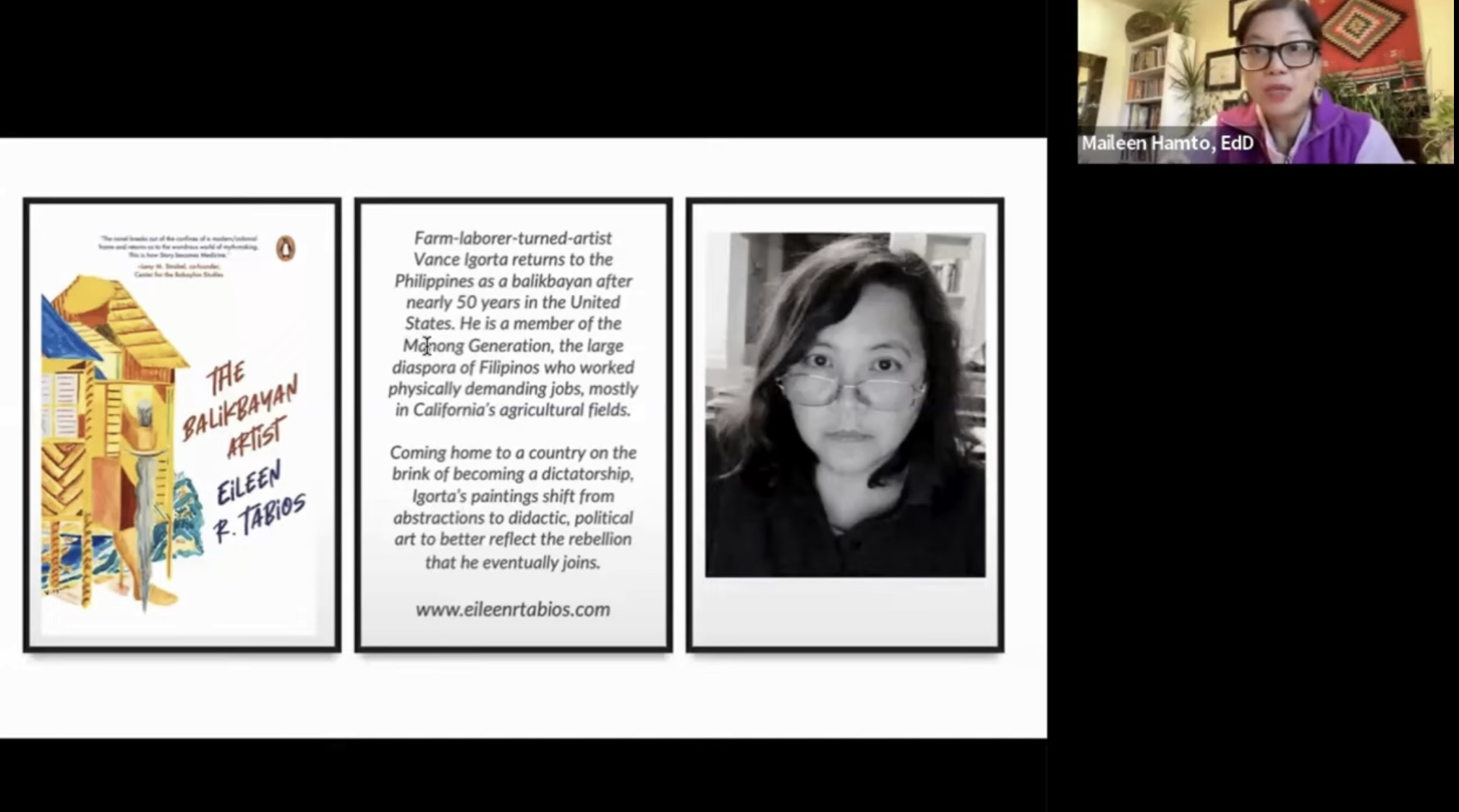
“Colors of Influence” is hosted by Maileen Hamto, founder of Colors of Influence Book Reviews.
~
Interview with Mark Louie Tabunan & An Excerpt from the Novel, Chant de la Sirene, December 2025
“The Balikbayan Artist is my second published novel. Along with my first novel, DoveLion, they insist on happy endings. The happy ending is defined as the people’s overthrow of dictators and repulsion of dictatorial tendencies. As author, I insist on these good endings. I feel disseminating stories of this possibility helps normalize their possibilities. We may be inefficient or ineffective in battling negative forces, but we should never simply accept them. Writing stories that provide alternatives to evil offers a psychological influence that may yet transform reality.”
~
~
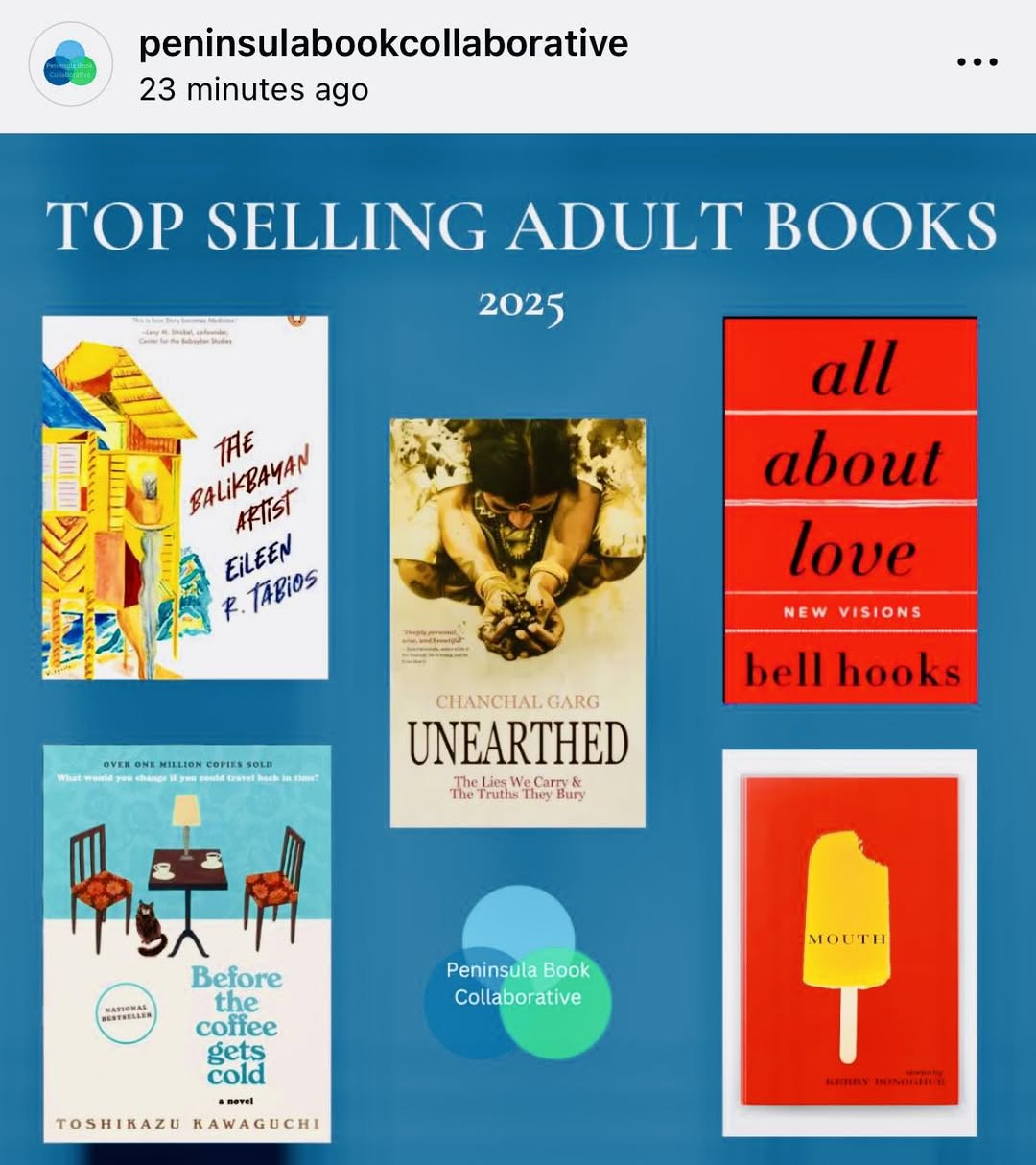
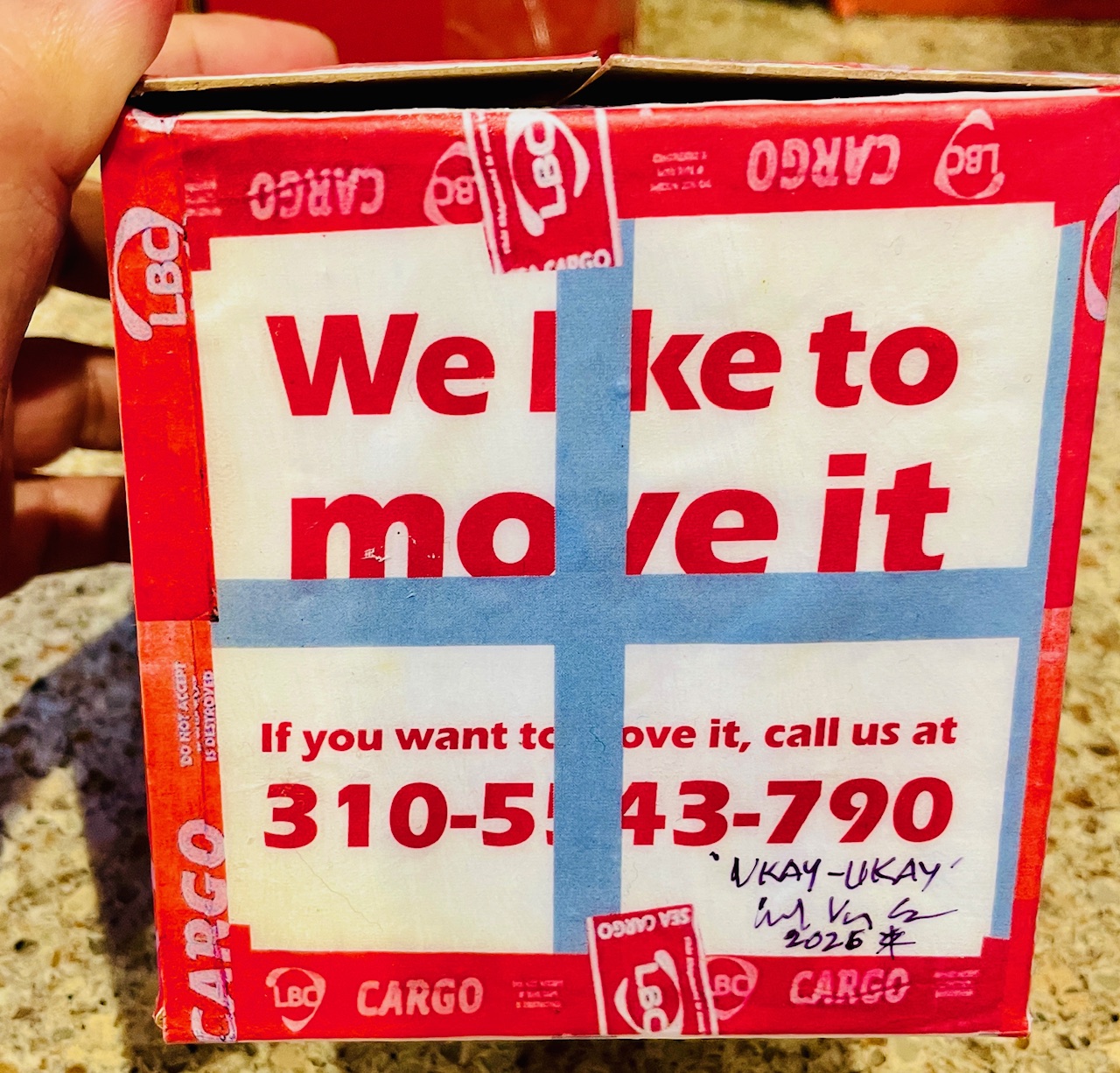
Mel Vera Cruz’s Sculpture of “Ukay-Ukay”
was custom-created by this renowned artist for The Balikbayan Artist. More information is HERE.
~
Interview with Jesse Duarte, Saint Helena Star and Napa Valley Register
Excerpt:
“Identity shouldn’t be a constraint,” Tabios said. “The book is about a Filipino artist, but if you’re interested in art, history, politics, psychology, humanities, even economics, you could be interested in this book.”
Igorta is based on the real [Venancio C.] Igarta… Despite being the first Filipino American artist to have his work displayed at the Metropolitan Museum of Art, Igarta isn’t well-known, even among Filipino-Americans. Tabios hopes “The Balikbayan Artist”–which she wrote in a more accessible style than her experimental and avant-garde poetry–will change that.”
~
Essay on The Halo-Halo Review, November 2025
“Notes on the Concept of Balikbayan, Notes on Eileen R. Tabios’ The Balikbayan Artist” by Michael Caylo-Baradi. An excerpt:
“At one point, Vance Igorta was forced to reveal his CIA affiliation to someone named Juan, one of the rebels against the regime of President Cassi, Jr, which Igorta has sequestered in his home. Here, the revelation allows Igorta to protect Juan from those who are looking for him; in fact, the CIA is instrumental in taking Juan out of the Philippines for safety, to make him disappear for a while. Helping Juan underlines a certain allegiance to a cause, one that critiques the current state of the Philippines through protests on streets, and other forms of disruption. But as someone affiliated with the CIA, however serendipitous and temporal Igorta’s affiliation might be, it’s hard to dismiss Igorta’s sense of allegiance for the United States, as well, having worked, and studied art there. He bears a Filipino’s highly textured relationship with the U.S., colored with a history of disenfranchisements, of being marginalized, which, to an extent, echoes the atrocities and injustices employed by Spain on the islands for three centuries. And however weighted Igorta’s sense of loyalty is between the Philippines and the U.S., it floats on an artist’s mode of contentment and preoccupation, who happens to be a retiree, as well, oscillating between poles, bifurcated by distinct identities, as Filipino and American. And one wonders to what extent Igorta imagines himself being in the first world, while living in the Philippines.”
~
On the Poems within The Balikbayan Artist
Stride Magazine features Eileen R. Tabios’ essay, “The Plotting Poem,” as part of its “Deflated Ego” series, Oct. 18, 2025.
~
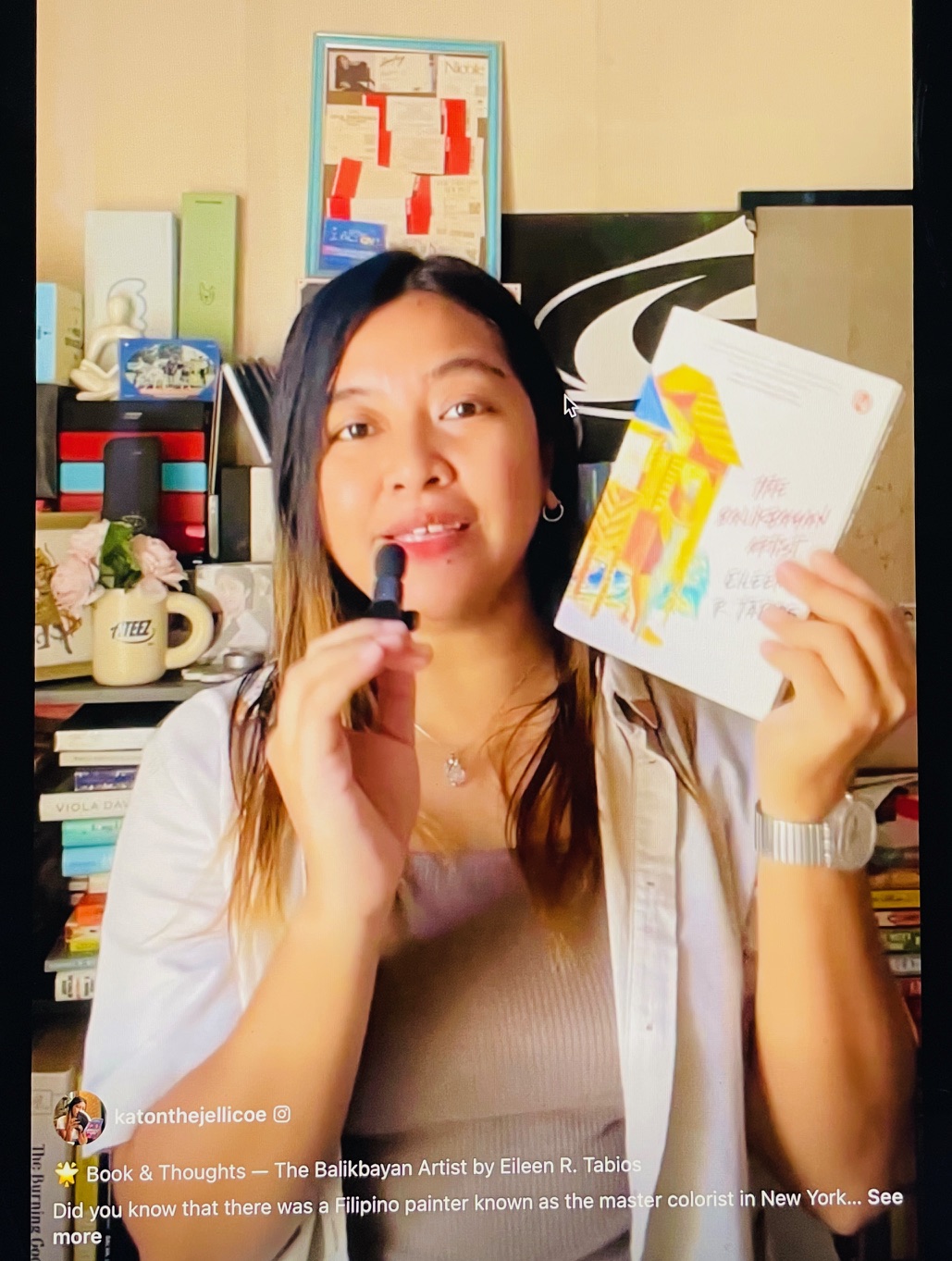
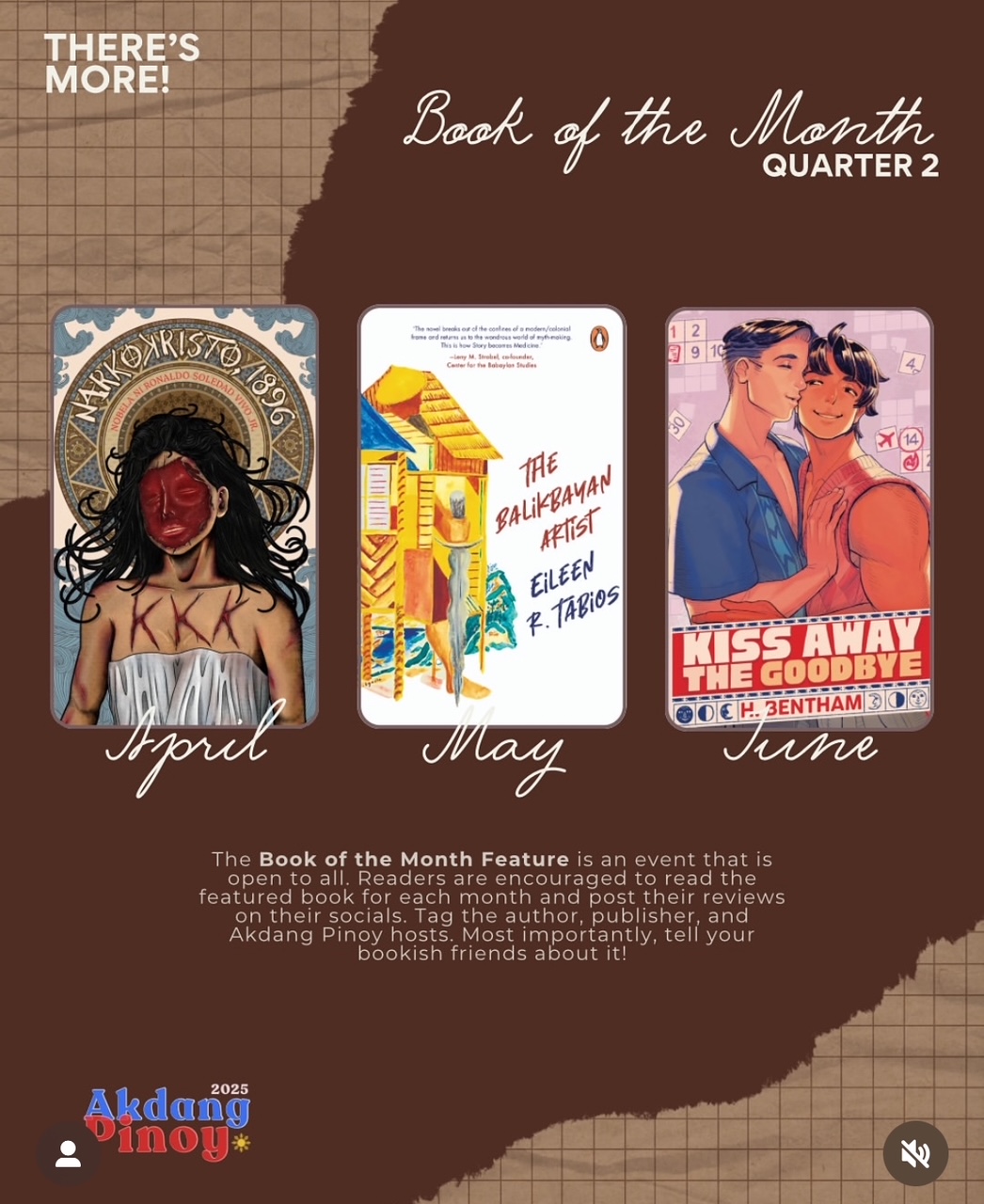
Akdang Pinoy Video Review and May 2025 Book of the Month:
Review Excerpt: “The writing… is poetic, descriptive, and humorous. I’ve annotated so much writing in this book because I love it so much!… I also love the complexity of each character. All have intriguing arcs, most of which I did not expect….I love how Tabios weaved politics, didacticism and the use of color to convey the underlying messages of this book.”
~
Notes on Eileen R. Tabios’ novel The Balikbayan Artist from the Carlos Bulosan Book Club by Michael Carlo-Baradi, as featured in The Halo Halo Review:
Excerpt:
“Igorta’s role as spy makes him more attentive to President Caasi’s dictatorship; Igorta becomes a kind of tourist into the political climate of the country, immersed in a variety of challenges and dark forces, not to mention those who resist and oppose that regime. Igorta’s shadow identity regurgitates and crawls inside him, desperate to see the light: which emerges into the light of his studio and the light of insights that becomes his diptychs, the two-paneled paintings that occupies the critic and artist in him, where one painting offers an image derived from daily life and culture in the Philippines, and the opposite side offers an illumination and meaning of what that image might be: a kind of critique for the first image, a moment to teach, and, quite deterministically, a moment to be didactic in the viewer’s sense of the ethical and moral.”
~
Interview/Conversation with Mark Louie Tabunan for Dichtung Yammer
Excerpt:
MLT: One thing that is worthy of attention in The Balikbayan Artist is its language and form. Art, poetry, and food, including the Ilokano language and culture [of the Northern Philippines], figure prominently throughout its pages. While of course this is up to readers to figure out, what do you hope to accomplish with your poetics?
ERT: With The Balikbayan Artist—as with my poetry—I want to show that a Filipino who writes in English doesn’t simply inherit the language but transforms it. This is important to me because English became widespread in the Philippines through colonialism; recall that shortly after the 1898-1902 Philippine-American War, the U.S. implemented a new public school system where Filipino students were required to speak English and fined or punished if they spoke their Filipino languages. The U.S. colonized the Philippines from 1898-1946, which is known as “the American colonial period.” // Rather than being a postcolonial, I want to be “transcolonial.” I associate “postcolonial” for being the aftermath—therefore linked to—colonialism. I prefer being “transcolonial” for “trans” symbolizing a transcendence of colonialism. To indicate this transformation, I often take an experimental approach in my English and creative writings.
~
Interview/Conversation With Luisa A. Igloria From The Halo Halo Review:
Excerpt from The Two Poets’ Conversation:
Luisa: Your novel’s character Vance Igorta (modeled after Filipino painter Venancio C. Igarta) recounts the differences between the reception he has received from people in his community in Surat barangay in the Philippines (curious, respectful, accepting), and those he has received from people in the art world in New York City (insulting, dismissive, racist). Igorta says he no longer minds, because he is “back where [he] was born: Surat in the Ilocos province, north and blessedly distant from the urban grit and cacophony of the capital, Manila.” What does this reflect, if at all, of current thinking about what constitutes originality, relevance, and the “right audiences” for a work of art or literature?
Eileen: I love this question. Because, yes, my novel could be seen as positing that there is a “right audience” for works of art and literature, and that such right audience is based on one’s community or background. This notion comes up often in works by artists of color in terms of how they are presented as well as received. But I think, generally, that some folks may be extrapolating wrongly from the responses of those who are racist, misogynist, or otherwise compassion-stunted or close-minded. The wrong extrapolation is to consider these responses to belong in the aesthetic realm of creating good work (however “good” may be defined by the artist and writer in creating their works). I may write a work—like The Balikbayan Artist—whose audience would seem to be Filipinos. But if you’re interested in art, history, psychology, the humanities, political science, poetry, and even economics, my novel would have something for you regardless of your ethnicity or community…. Also, for subjective assessments like “relevance,” we should separate the contexts of creation and reception. I may or may not consider audience at the time I’m writing; my writing standards are more directly related to creating the work well rather than hewing it to a preconceived audience even when, later, I may hope for a positive reception from a particular audience.
~
Rachielle Sheffler’s Review on Baguio Girl:
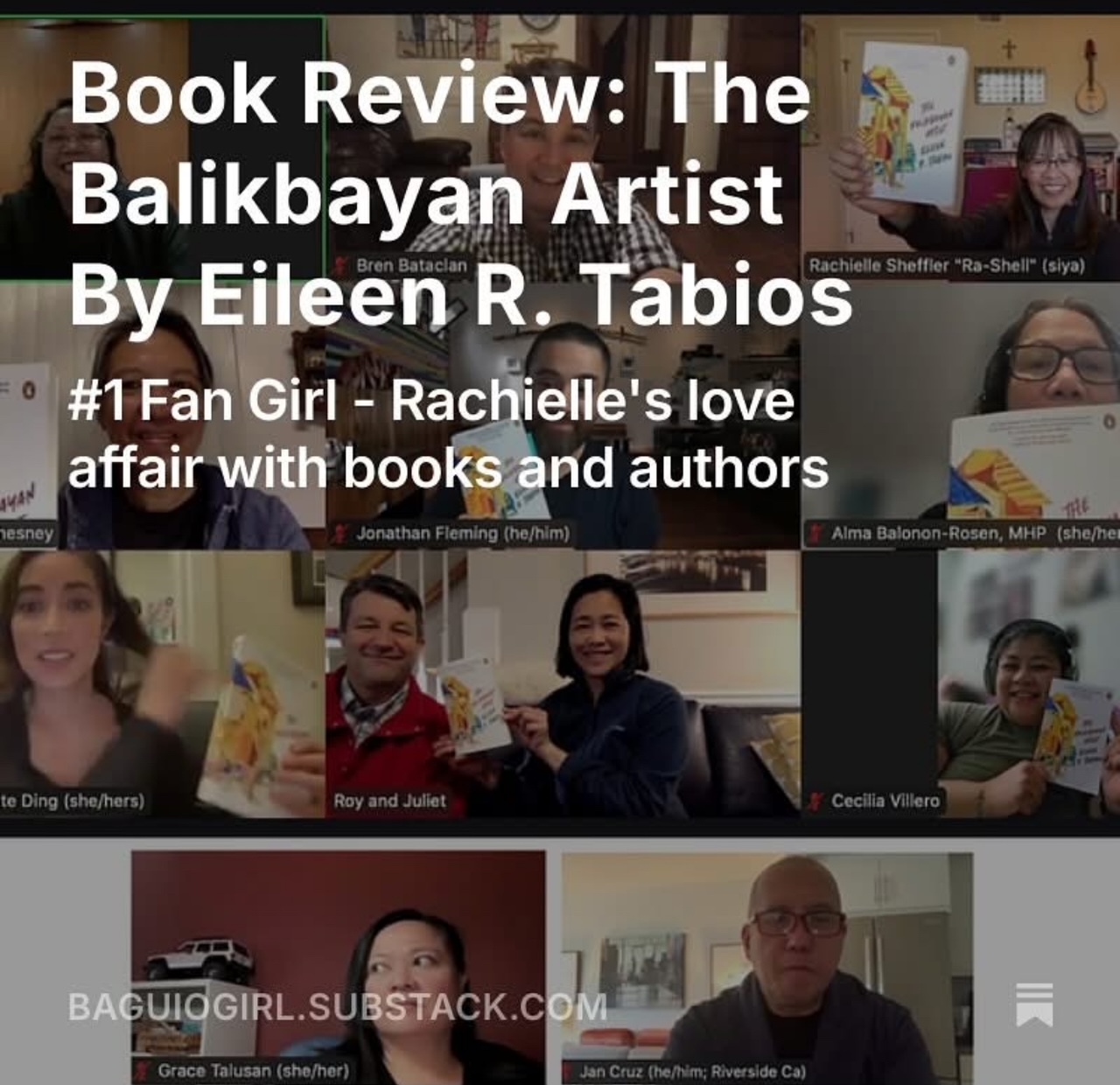
I am usually a fast reader, but I took time with The Balikbayan Artist. Its didactic method lent each chapter a lesson about color. Inspired by real-life artist Venancio Igarta, the protagonist Vance Igorta drew diptychs, one painting showing what he saw and the other what he predicted if the country were under a dictatorship.
I loved the cleverness in using language. For example, the dictator of the neighboring country, Maharlika, is Tao Maliit (Small Person). The town’s leader was Mayor Titty (sounds like a man’s genitals) and the Philippine president was named Caasi (translates to mercy). This play on words weaves the threads of resistance.
~
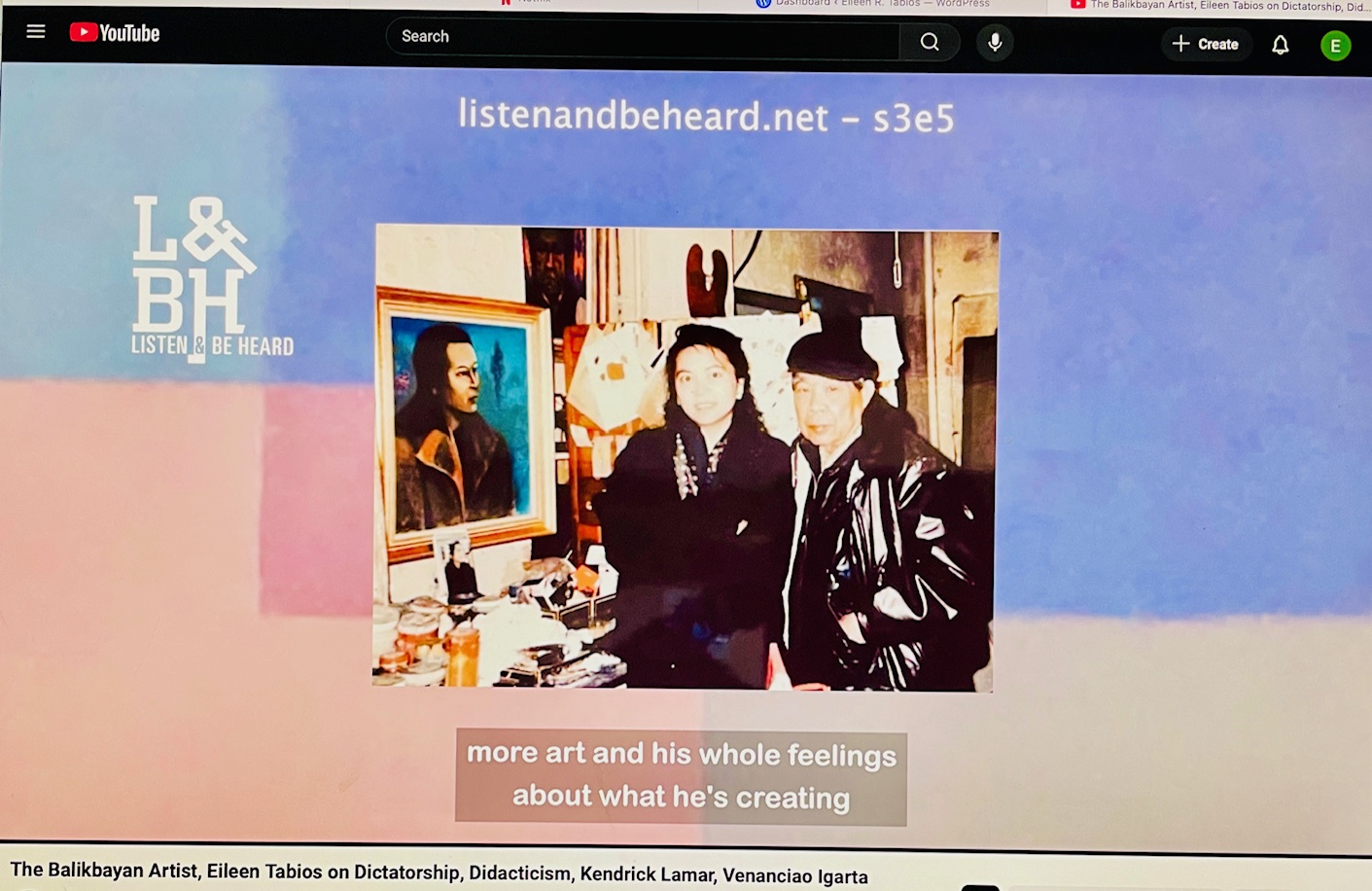
Interview/Conversation With Martha Cinader on Listen & Be Heard Network:
~
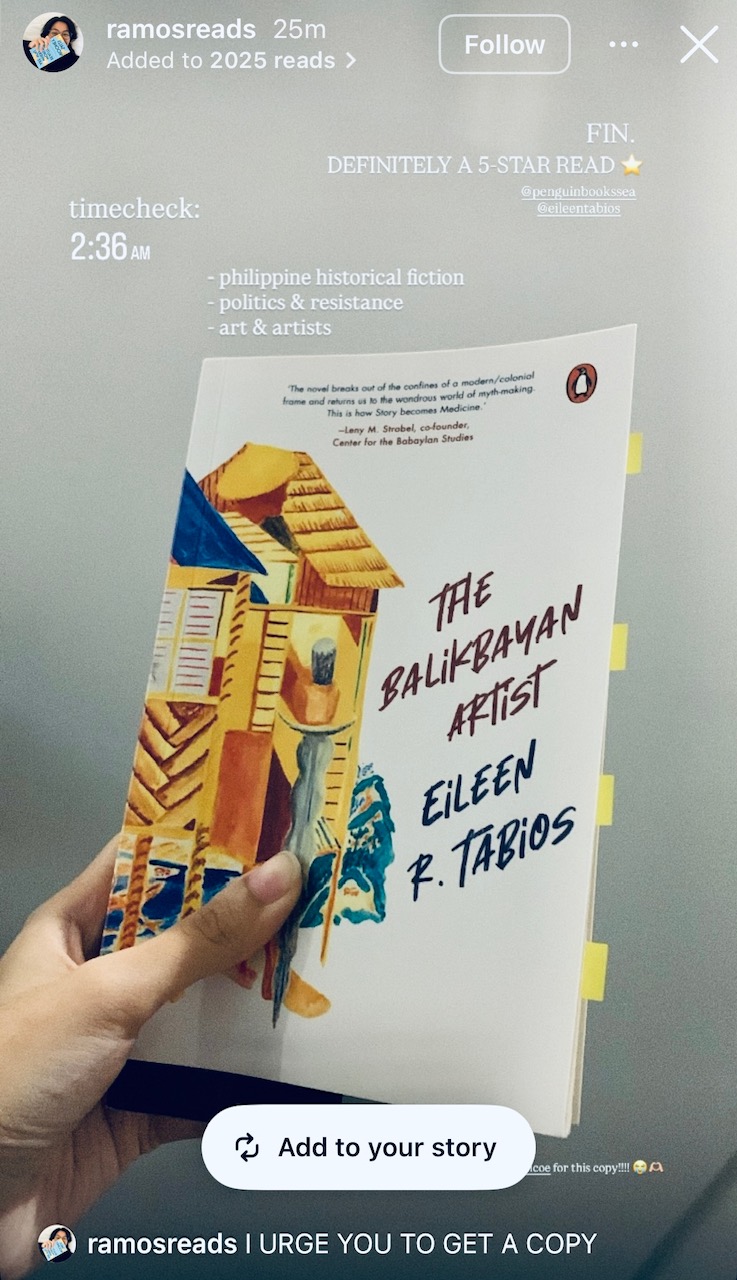
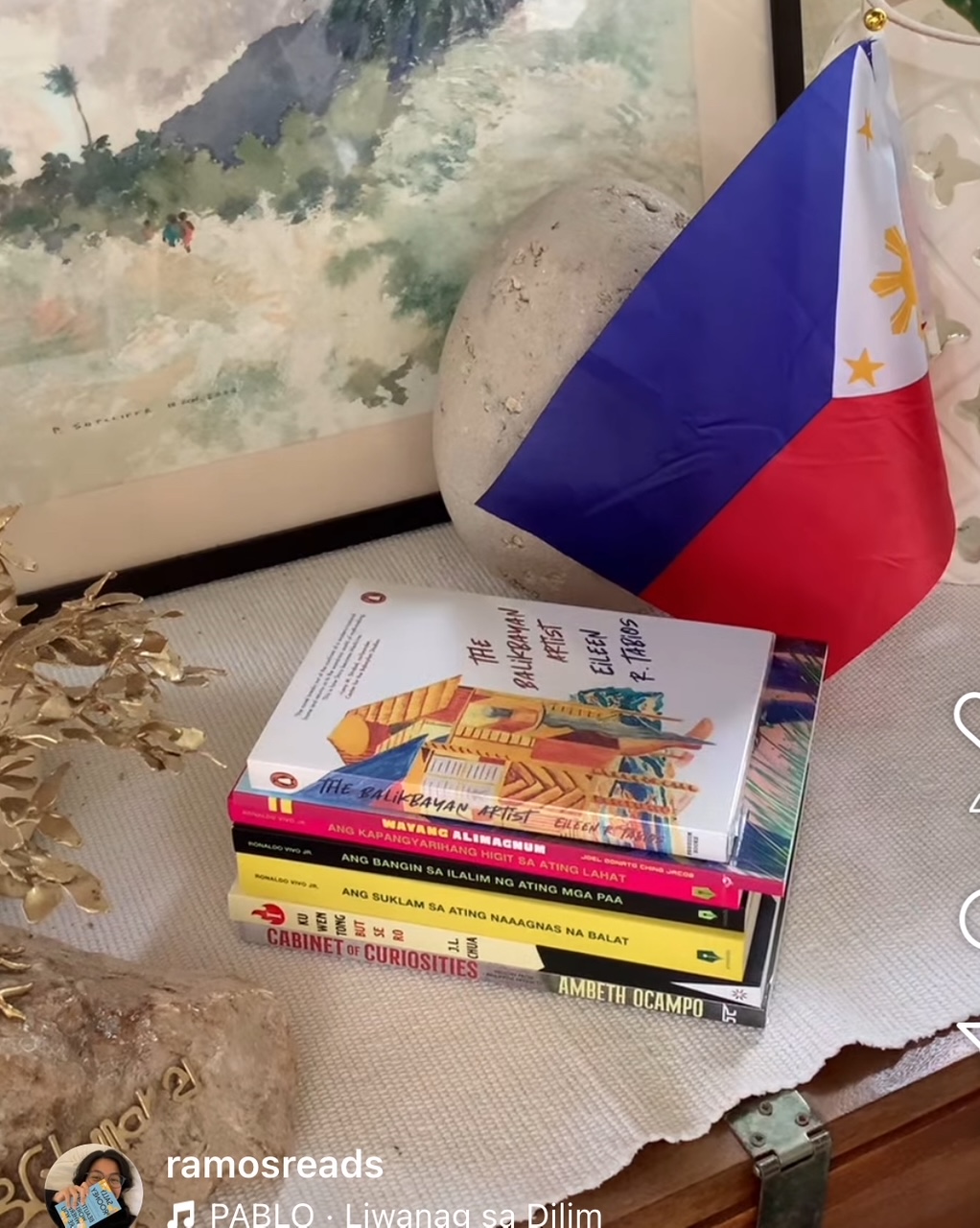
Review by Kyra of “ramos reads” Bookstagrammer
Definitely a 5-Star Read. The Balikbayan Artist was inspired by the life of Venancio Igarta, the real-life artist of the Manong Generation. he was deeply involved in studying color theory, and this book touches on it a lot especially in describing how our main character uses color in his art and his thoughts… marketed as historical fiction. with themes of politics, art and resistance, this is a story worth sharing. Taking a line from the author’s note: “The Balikbayan Artist seeks to present Kapwa thorugh a book whose fiction is not separate from reality and not just offer present reality but also the past and future concurrently.”

~
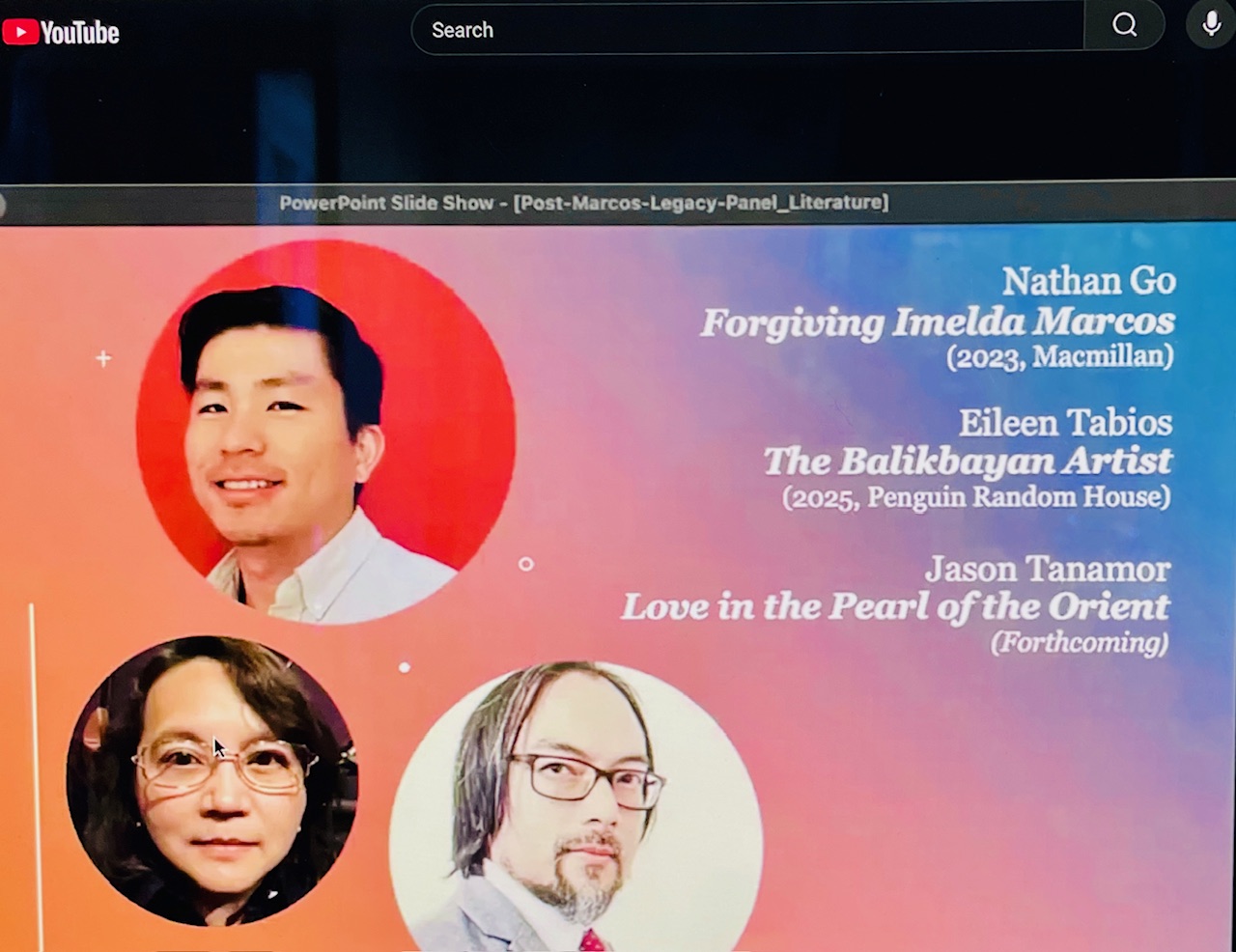
Conversation With Nathan Go and Jason Tanamor From “Colors of Influence Book Talks“:
Reviews & Reader Responses:
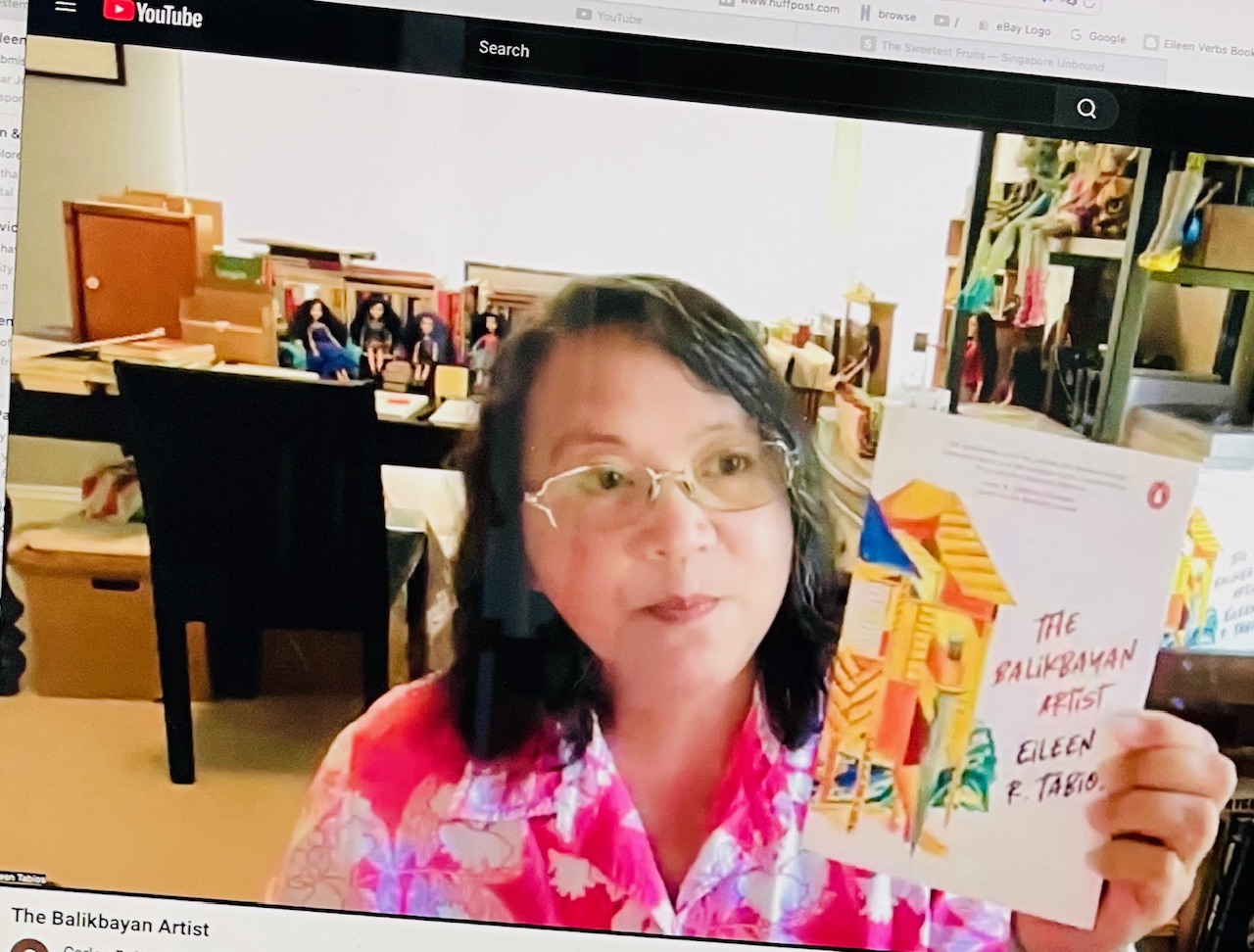
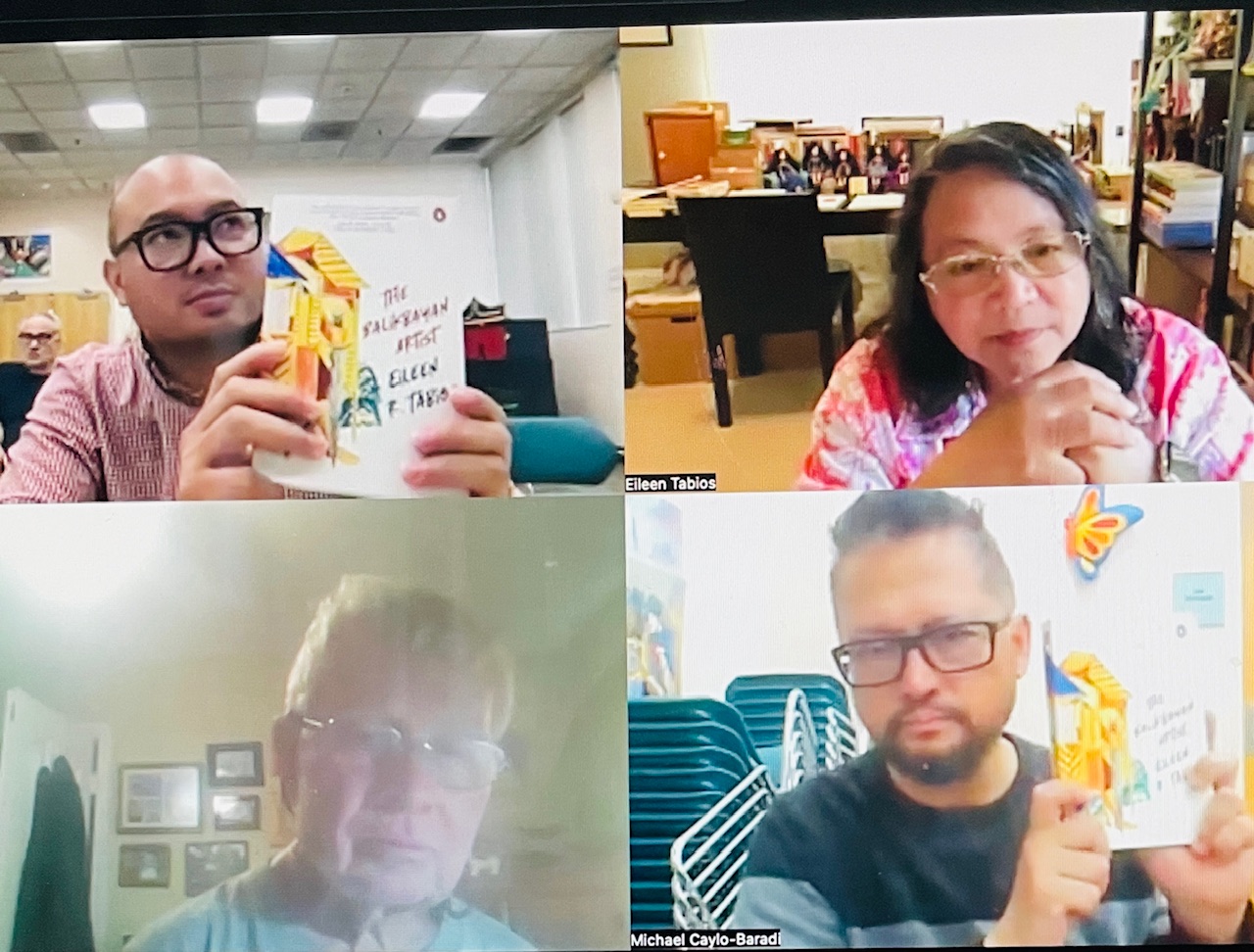
Los Angeles Book Launch with the Carlos Bulosan Book Club, July 19, 2025
A Presentation with Discussants Rachielle Sheffler and Michael Caylo-Baradi available on the CBBC YouTube channel
With The Balikbayan Artist, Eileen R. Tabios continues to innovatively imagine how Kapwa can be manifested in fiction. Kapwa is an expression of the indigenous Filipino world view that speaks of the mythic depth and breadth of the Seen and the Unseen realms. As with her first novel DoveLion, a new classic for indigenous futurism, The Balikbayan Artist moves across a wide range of themes and topics—art, history, youthful idealism, how power corrupts, revolution, immigration, loss and desire, among other concepts. Her story of an artist returning from the diaspora to his birth land, the Philippines, becomes a means for showing how everything and everyone is interconnected across all of time and in ways we might not anticipate. The novel breaks out of the confines of a modern/colonial frame and returns us to the wondrous world of myth-making. This is how Story becomes Medicine.
—Leny M. Strobel, Editor, Babaylan: Filipinos and the Call of the Indigenous & Co-Founder, Center for the Babaylan Studies. Also, “A Love Note,” Medium, Dec. 29, 2024
“Penguin Random House Southeast Asia goes from strength to strength with each passing year. Some of its most noteworthy books came from the pen of Filipino writers…. The Balikbayan Artist is a novel by US-based writer Eileen R. Tabios.
—Danton Remoto, The Manila Times, Sept. 5, 2024
In her novel Balikbayan Artist, she explored issues of displacement, individuality, and the complex dynamic between the diaspora and the homeland. She claims agency over personal and communal histories by using experimental poetry to subvert conventional narrative. By emphasizing self-definition, survival, and the importance of creativity in negotiating multiple selves, her writing pushes feminist discourse forward.
—Professional & Future English Teachers’ Association’s “Babae sa Panitikan: Spotlight on Contemporary Filipina Writers,” Women’s Month March 2025
After exhilarating the poetry world with her marvelously imaginative poetry, Eileen R. Tabios has turned her ever-experimenting, intellectual mindset to the novel. As she did in poetry, her fiction-writing is expanding the landscape of the genre. The Balikbayan Artist reveals her abilities to address and connect a wide variety of subjects in a manner that touches the hearts of readers. Based on my many years of enjoying her poetry, I know that each of her novels promises to be as unique as each of her poetry collections.
—Sandy McIntosh, poet/memoirist, bestselling author & Publisher of Marsh Hawk Press
A daughter of the diaspora, Eileen R. Tabios has redefined the word ‘Balikbayan’ to signify existential longing and fortitude. Her gift as a writer is that she allows us space to perceive a myriad of human experiences: desire, loathing, horror, outrage, grief, love. It is this universality that awakens us—to counsel us, Always, always: discern with compassion.
—Aileen Cassinetto, Academy of American Poets Laureate Fellow & Co-Editor, Dear Human at the Edge of Time
“Buy this book!”
—Ninotchka Rosca, State of War
The novel’s first three words are immediately riveting: “Colour is promiscuous,” delivered in the first-person voice of Igorta himself. He then explains, “I created many paintings exploring how colours engage with each other.” He has just arrived in Surat, a fictional village named by the Filipino word for ‘letter.’” And, though not quite a homonym, “Surat” and “Seurat” are so orthographically similar that how Igorta’s “colours engage with each other” calls to mind Seurat’s chromoluminarism, the Neo-impressionist style defined by separation of color into individual dots (a practice also known as divisionism) and pointillism—applying small strokes or dots of color to a surface so that from a distance they visually blend. In turn, this blending (merging) serves to metaphorically invoke Kapwa, to which Tabios’ “Author’s Note” is devoted: Kapwa, the interconnection of all things throughout time, including the oneness of past, present, and future, accounts for Igorta’s realization that “being an artist required being a voracious learner of anything and everything because art’s expanse encompasses anything and everything.””
—Lynn M. Grow, The Halo-Halo Review, June 11, 2025 (Entire review HERE)
“The Balikbayan Artist, blends art and artists with resistance to dictatorship, in a prescient—and sometimes hilarious—commentary on U.S. politics.”
—Louise Dunlap, Inherited Silence: Listening to the Land, Healing the Colonizer Mind
“Tabios’ novel depicts an influential Filipino painter whose work speaks truth to power throughout the country’s dictatorship….the novel espouses art as a form of love and protest in the face of corruption.”
—Isabella Pechaty, BARNARD Magazine, Spring 2025
“Within the chapters are passages about art theory and history, techniques of painting, explications of aspects of the individual works of an artist, and information about the lives and milieus of various artists. Between DoveLion and The Balikbayan Artist, enough material is presented to constitute a respectable university level Introduction to Art course while, in the process, exemplifying Tabios’ stance on didacticism. In The Balikbayan Artist, readers can glide through this material minus the angst over a final exam and buoyed by the secret agent type of plot and the array of interesting characters.”
—Lynn M. Grow, The Halo-Halo Review (forthcoming 2025)
“It blew me away…Personal takes on color gave it a poetic aspect which I appreciated.”
—Martha Cinader, Listen and Be Heard Network for Readers and Writers, February 2025
“…particularly interested in how the author applies the concept of Kapwa to the novel: [quoting the author:] ‘In what I consider to be “Kapwa time,” there is no difference between past, present and future since one is connected to everything in the universe across all time periods. This Kapwa connection is also reflected in how the novel symbolically erases the barrier between fiction and reality by incorporating as a character Eileen Tabios who is, obviously, myself and some poems I wrote outside of this novel’s parameters.”
—Jean Vengua, The Eulipion Outpost, Nov. 2, 2024
Filipino-American History Month Recommendation for “adult, literary fiction.” This story weaved art and politics so well that I became so engrossed in both. What an impeccable writing on color and dictatorship.
—”katonthejellicoe” Bookstagramer, October 2024
For those who didn’t know, I am a Fine Artist. I don’t really paint for years now, or draw freehand. So I am really devouring this book. This book is inspiring me to start again.
—“jdlreads” Bookstagramer, October 2024
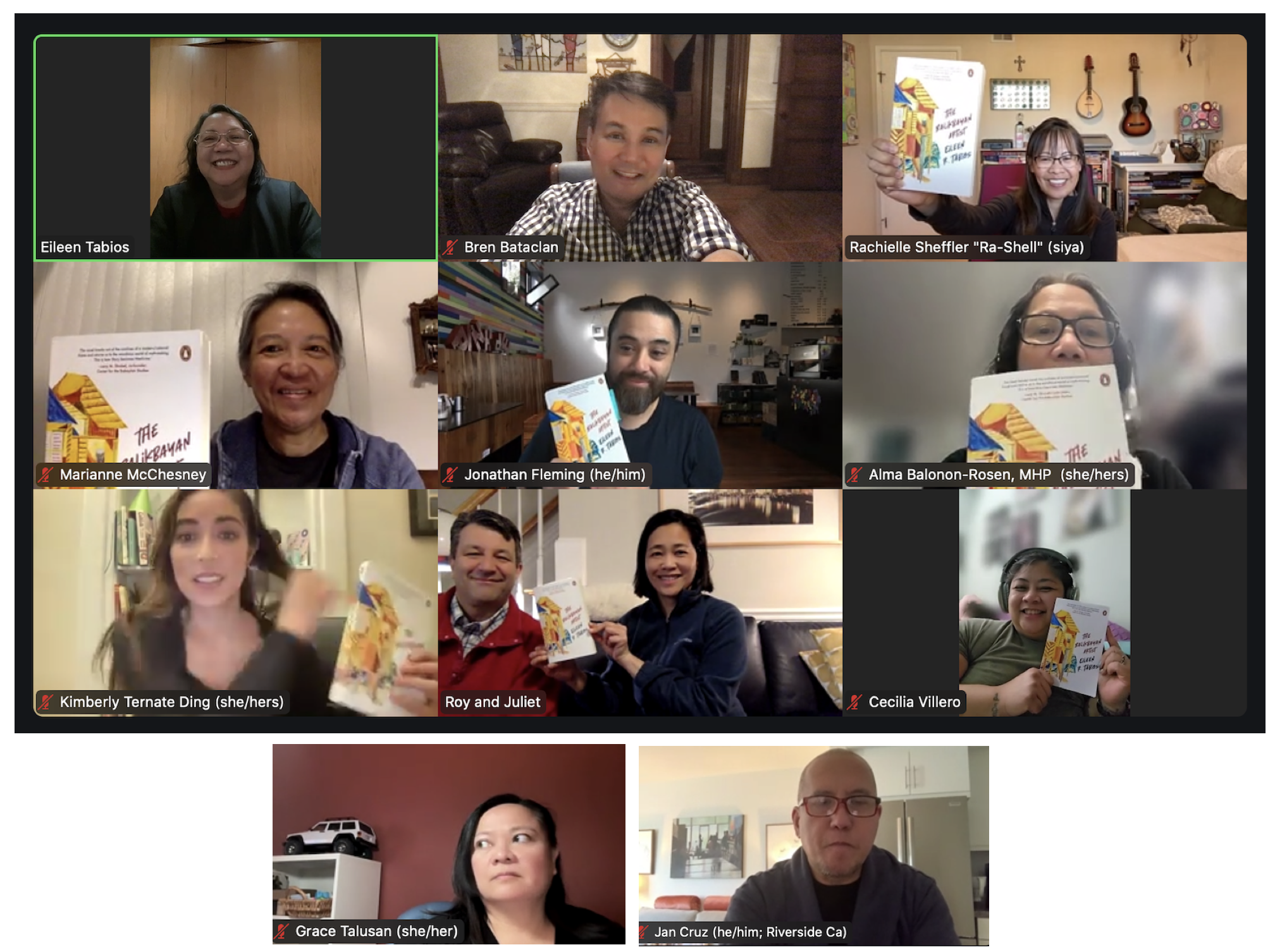
A “Word Cloud” of Responses from the Boston Filipino American Book Club, March 2025

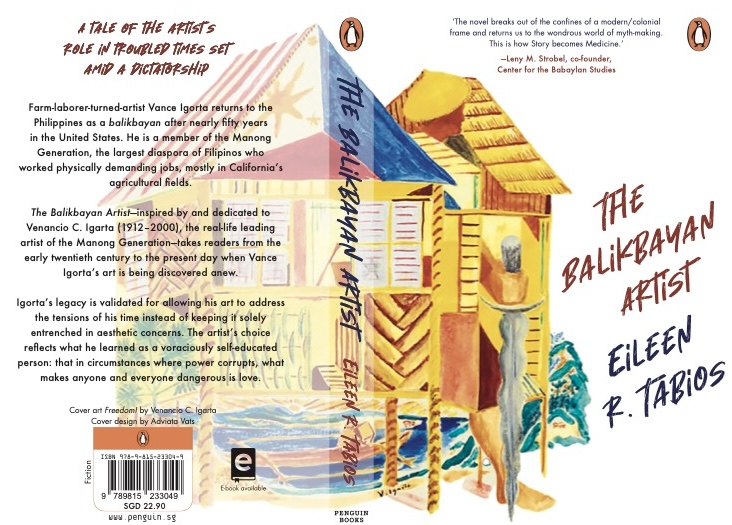
Cover Spread:
Selected Excerpts:
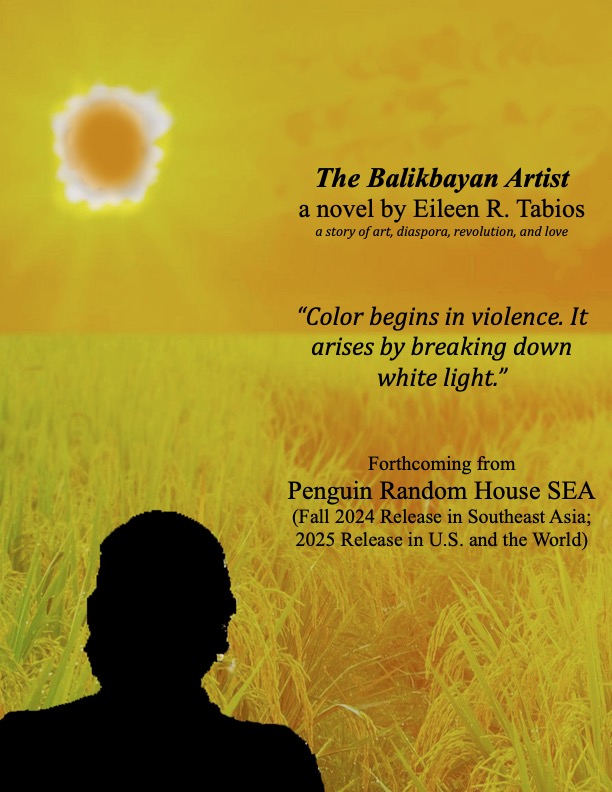
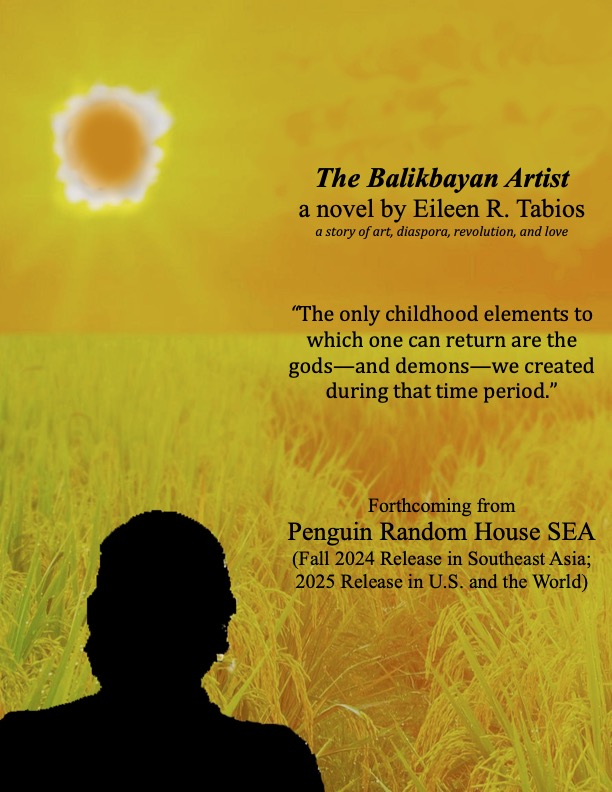
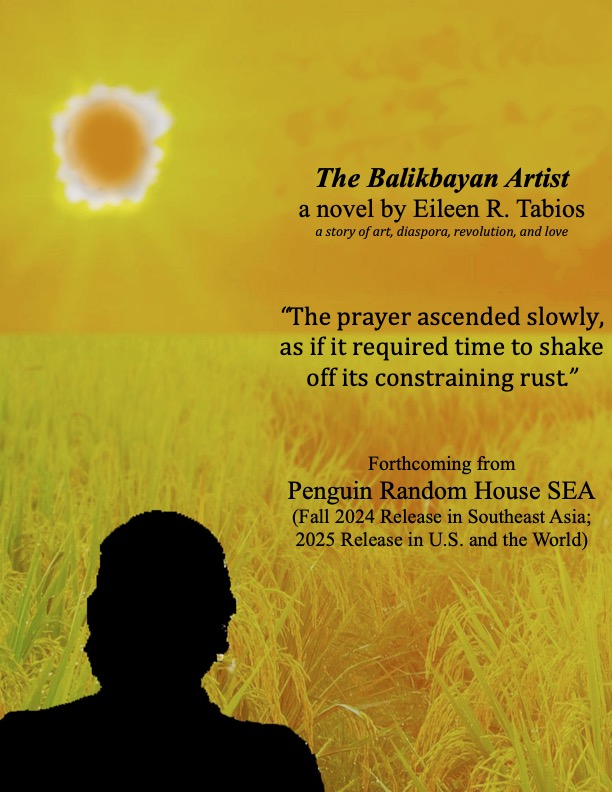
Cover Artist:
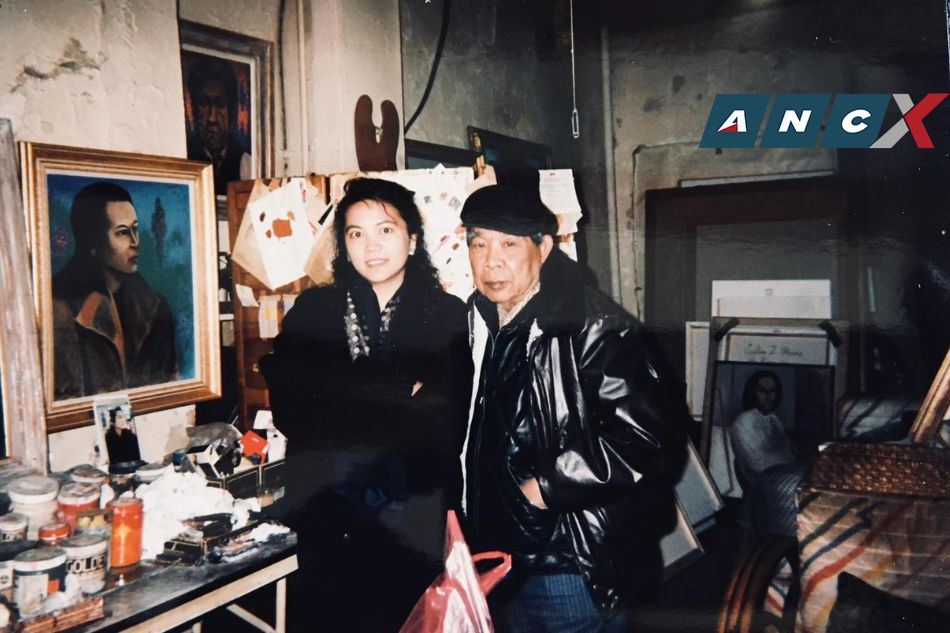
Venancio C. Igarta with author Eileen Tabios in Igarta’s studio in Chinatown, New York. Circa 1998
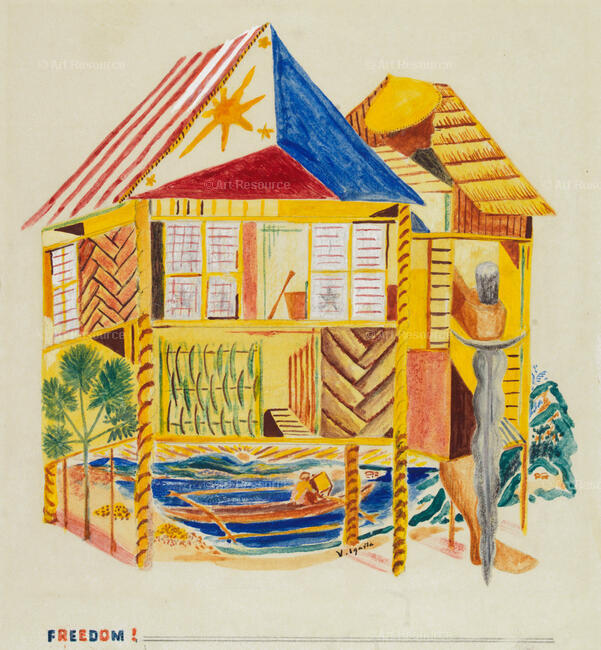
The book cover, designed by Adviata Vats, is inspired by one of Venancio C. Igarta’s artworks: “Freedom!”, from the United Nations Series, by Venancio Igarta (1912-2000). 1945. Gouache and pencil on paperboard, sheet: 15 1/4 x 13 1/8 in. (38.6 x 33.2 cm). Gift of Container Corporation of America, 1984.124.123. Photo Credit: Smithsonian American Art Museum, Washington, D.C. / Art Resource, NY.
About the Author:
Eileen R. Tabios has released over 70 collections of poetry, fiction, art, essays, and experimental writings from publishers around the world. Translated into 13 languages, she also has edited, co-edited or conceptualized 15 anthologies which has involved hundreds of other poets and writers. Recent releases include her second novel The Balikbayan Artist; an autobiography, THE INVENTOR; a poetry collection Because I Love You, I Become War; an art monograph, Drawing the Six Directions; a flash fiction collection (in collaboration with harry k stammer), Getting To One; a novel DoveLion: A Fairy Tale for Our Times (released as a Filipino translation, KalapatingLeon, by Danton Remoto); and two French books, PRISES (Double Take) (trans. Fanny Garin) and La Vie erotique de l’art (trans. Samuel Rochery). Her body of work further includes a first poetry book, Beyond Life Sentences, which received the Philippines’ National Book Award for Poetry, as well as invention of the hay(na)ku, a 21st century diasporic poetic form; the MDR Poetry Generator that can create poems totaling theoretical infinity; the “Flooid” poetry form that’s rooted in a good deed; and the monobon poetry form based on the monostich. Her writing and editing works have received recognition through awards, grants and residencies. More information is at https://eileenrtabios.com
 Eileen R. Tabios